
आज अगर technology की दुनिया में किसी एक शब्द की सबसे ज्यादा चर्चा हो रही है, तो वह है Artificial Intelligence यानी AI।
Artificial इंटेलिजेंस अब केवल science fiction या फिल्मों की technology नहीं रह गई है। हम रोजाना कई ऐसे digital tools और services इस्तेमाल करते हैं जिनके पीछे किसी न किसी रूप में Artificial Intelligence, Machine Learning या data-driven algorithms काम कर रहे होते हैं।
जब YouTube हमें हमारी पसंद के videos दिखाता है, Google Search हमारे सवालों के जवाब खोजने में मदद करता है, smartphone चेहरे को पहचानता है, online shopping platform products recommend करता है या कोई AI chatbot हमारे सवाल का जवाब तैयार करता है—इन सभी उदाहरणों में AI technology की भूमिका हो सकती है।
लेकिन AI वास्तव में है क्या?
क्या AI इंसानों की तरह सोचता है?
क्या AI खुद से सीख सकता है?
AI को इतना intelligent कैसे बनाया जाता है?
क्या AI भविष्य में लाखों jobs को बदल देगा?
और सबसे महत्वपूर्ण—आने वाले वर्षों में AI हमारी जिंदगी को किस तरह प्रभावित कर सकता है?
इस लेख में हम Artificial Intelligence को बिल्कुल आसान भाषा में, लेकिन गहराई से समझेंगे।
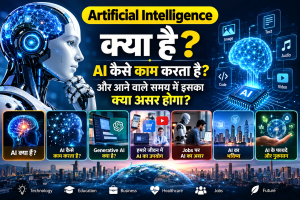
Artificial Intelligence क्या है?
Artificial Intelligence (AI) computer science और technology का एक ऐसा क्षेत्र है जिसमें ऐसे computer systems विकसित किए जाते हैं जो कुछ ऐसे tasks कर सकें जिनके लिए सामान्यतः human intelligence की आवश्यकता होती है।
इन tasks में शामिल हो सकते हैं:
- भाषा को समझना
- आवाज को पहचानना
- तस्वीरों और objects को पहचानना
- information को analyze करना
- patterns ढूंढना
- predictions करना
- recommendations देना
- problems को solve करने में सहायता करना
- text, images, audio या अन्य content generate करना
सरल भाषा में समझें तो:
AI ऐसी technology है जो machines को data और computational methods की मदद से कुछ intelligent tasks करने में सक्षम बनाती है।
हालांकि यह समझना महत्वपूर्ण है कि हर AI system इंसान की तरह “सोचता” नहीं है। अलग-अलग AI systems को अलग-अलग उद्देश्यों के लिए design किया जाता है और उनकी capabilities उनके data, model, algorithms और training methods पर निर्भर करती हैं।
Artificial Intelligence शब्द की शुरुआत कहाँ से हुई?
Artificial Intelligence का विचार नया नहीं है।
1950 के दशक में computer scientists ने यह सवाल उठाना शुरू किया कि क्या machines ऐसे tasks कर सकती हैं जिन्हें हम intelligence से जोड़ते हैं।
1956 में Dartmouth workshop के दौरान Artificial Intelligence शब्द का औपचारिक रूप से इस्तेमाल किया गया। इसके बाद AI research ने कई चरण देखे।
शुरुआती दौर में researchers ने logic और rules पर आधारित systems बनाए।
बाद में computing power बढ़ी, data की मात्रा बढ़ी और Machine Learning तथा Deep Learning जैसी techniques विकसित हुईं।
आज के आधुनिक AI systems के विकास में बड़े datasets, powerful computing infrastructure और advanced neural-network architectures की महत्वपूर्ण भूमिका है।
Artificial Intelligence और Machine Learning में क्या अंतर है?
बहुत से लोग AI और Machine Learning को एक ही चीज समझते हैं, लेकिन दोनों में अंतर है।
Artificial Intelligence एक व्यापक field है।
Machine Learning AI के अंदर आने वाली एक महत्वपूर्ण approach है।
Machine Learning में computer systems को data से patterns सीखने के लिए train किया जाता है, ताकि वे नए data पर predictions या decisions में सहायता कर सकें।
उदाहरण के लिए, यदि किसी system को हजारों emails के examples दिए जाएं और बताया जाए कि कौन-से emails spam हैं और कौन-से नहीं, तो model इन examples से patterns सीख सकता है।
इसके बाद वह किसी नए email को देखकर अनुमान लगा सकता है कि वह spam हो सकता है या नहीं।
Deep Learning क्या है?
Deep Learning, Machine Learning का एक specialized approach है जिसमें artificial neural networks की कई layers का उपयोग किया जाता है।
Deep Learning ने image recognition, speech recognition, natural language processing और generative AI जैसे क्षेत्रों में महत्वपूर्ण progress को संभव बनाया है।
उदाहरण के लिए:
- चेहरे की पहचान
- आवाज की transcription
- image classification
- language understanding
- text generation
- image generation
जैसे कई applications में deep neural networks उपयोगी साबित हुए हैं।
Generative Artificial Intelligence क्या है?
हाल के वर्षों में Generative AI ने Artificial Intelligence को आम लोगों के बीच और अधिक लोकप्रिय बनाया है।
Generative AI ऐसे AI systems को कहा जाता है जो input या prompt के आधार पर नया content generate कर सकते हैं।
यह content कई प्रकार का हो सकता है:
Text:
Articles, summaries, emails, scripts और ideas
Images:
Illustrations, designs और creative visuals
Audio:
Speech और music जैसी सामग्री
Video:
कुछ systems video content generate या modify करने में सहायता कर सकते हैं।
Code:
Software development में code लिखने और समझने में सहायता
इस technology ने content creation, education, software development और creative work के तरीके को तेजी से बदलना शुरू किया है।
Artificial Intelligence आखिर काम कैसे करता है?
AI को समझने के लिए एक simple process को समझिए।
Step 1: Data
AI systems के लिए data बहुत महत्वपूर्ण होता है।
Data text, images, audio, video, numbers या अन्य digital information के रूप में हो सकता है।
Step 2: Training
Machine Learning system को data के examples से patterns सीखने के लिए train किया जाता है।
Training के दौरान model अपने parameters को adjust करता है ताकि वह दिए गए task पर बेहतर performance कर सके।
Step 3: Model
Training के बाद तैयार system को model कहा जा सकता है।
यह model नए input को process करके output generate कर सकता है।
Step 4: Inference
जब कोई user AI system को नया input देता है, तो model अपने learned patterns के आधार पर output तैयार करता है।
उदाहरण के लिए, आप किसी AI system से पूछते हैं:
“Artificial Intelligence क्या है?”
System आपके input को process करता है और अपने model के आधार पर response generate करता है।
AI इंसानों की भाषा कैसे समझता है?
AI systems के लिए human language को समझना एक बहुत complex problem है।
Natural Language Processing यानी NLP techniques computers को human language के साथ काम करने में मदद करती हैं।
Modern language models text को छोटे units में process करते हैं जिन्हें सामान्यतः tokens कहा जाता है।
Model training के दौरान language में मौजूद patterns और relationships सीखता है।
जब आप कोई सवाल पूछते हैं, तो system आपके input को process करके context के आधार पर संभावित output generate करता है।
यही कारण है कि modern AI systems कई बार बहुत natural और conversational responses दे सकते हैं।
क्या Artificial इंटेलिजेंस वास्तव में सोचता है?
यह एक महत्वपूर्ण सवाल है।
AI का output कई बार इतना human-like होता है कि हमें लगता है कि machine इंसान की तरह सोच रही है।
लेकिन किसी AI system के behavior को सीधे human consciousness या human understanding के बराबर मानना सही नहीं है।
AI systems computational models, training data और algorithms के आधार पर outputs generate करते हैं।
इसलिए AI की capability को समझते समय यह याद रखना चाहिए कि human intelligence और artificial intelligence एक ही चीज नहीं हैं।
हमारे रोजमर्रा के जीवन में Artificial Intelligence कहाँ इस्तेमाल हो रहा है?
AI धीरे-धीरे हमारे everyday digital experience का हिस्सा बन चुका है।
1. Smartphones
Modern smartphones में camera enhancement, voice recognition, face detection और personalization जैसे कई features में AI-based technologies इस्तेमाल हो सकती हैं।
2. Search Engines
Search engines user queries को समझने और relevant information उपलब्ध कराने के लिए sophisticated algorithms और machine learning techniques का इस्तेमाल करते हैं।
3. YouTube और Streaming
Video और entertainment platforms user behavior तथा अन्य signals के आधार पर recommendations तैयार कर सकते हैं।
4. Online Shopping
E-commerce platforms products recommend करने, search results personalize करने और customer experience improve करने के लिए AI और machine learning का उपयोग कर सकते हैं।
5. Banking
Financial institutions fraud detection, risk analysis और transaction monitoring जैसे क्षेत्रों में AI का उपयोग कर सकते हैं।
6. Healthcare
Healthcare में AI medical imaging analysis, research, documentation और decision-support applications जैसे क्षेत्रों में इस्तेमाल हो रहा है।
यहां यह समझना जरूरी है कि healthcare जैसे sensitive क्षेत्र में AI professional judgment का replacement नहीं माना जाना चाहिए।
7. Education
AI students को explanations, practice questions, personalized learning support और study assistance प्रदान कर सकता है।
Artificial Intelligence के सबसे बड़े फायदे क्या हैं?
AI की popularity का एक बड़ा कारण इसकी potential productivity है।
1. समय की बचत
Repetitive और time-consuming tasks को automate करने में AI मदद कर सकता है।
2. Productivity में वृद्धि
एक व्यक्ति research, drafting, analysis और routine workflows जैसे कई कामों में AI assistance ले सकता है।
3. बड़े Data का Analysis
Computers बहुत बड़े datasets को relatively तेजी से process कर सकते हैं और patterns identify करने में सहायता कर सकते हैं।
4. Personalized Experience
AI systems user behavior और preferences के आधार पर personalized recommendations दे सकते हैं।
5. Accessibility
Speech-to-text, translation और अन्य AI-powered technologies information और digital services को अधिक लोगों के लिए accessible बनाने में मदद कर सकती हैं।
Artificial Intelligence के नुकसान और जोखिम क्या हैं?
जहां AI के फायदे हैं, वहीं इसके साथ गंभीर challenges भी जुड़े हैं।
गलत जानकारी
AI systems कभी-कभी confident लेकिन गलत information generate कर सकते हैं।
इसे अक्सर AI hallucination कहा जाता है।
इसलिए महत्वपूर्ण information को reliable sources से verify करना जरूरी है।
Privacy
AI applications में personal information और data के इस्तेमाल को लेकर privacy concerns महत्वपूर्ण हैं।
Bias
अगर training data या system design में bias मौजूद है, तो AI output में भी bias दिखाई दे सकता है।
Deepfakes
Generative AI की मदद से realistic fake images, audio और videos बनाए जा सकते हैं।
इनका misuse misinformation, fraud और impersonation में हो सकता है।
Cybersecurity
AI का उपयोग defensive cybersecurity के साथ-साथ malicious activities को support करने के लिए भी किया जा सकता है। इसलिए security safeguards महत्वपूर्ण हैं।
क्या AI इंसानों की Jobs खत्म कर देगा?
AI के बारे में सबसे ज्यादा चर्चा इसी विषय पर होती है।
इसका जवाब केवल “हाँ” या “नहीं” में देना सही नहीं होगा।
AI कुछ repetitive और predictable tasks को automate कर सकता है।
इससे कुछ occupations में काम करने का तरीका बदल सकता है और कुछ roles में required skills भी बदल सकती हैं।
दूसरी तरफ, AI technology के development और adoption के कारण नए roles और नए प्रकार के काम भी सामने आ सकते हैं।
सबसे महत्वपूर्ण बात यह है कि एक job और उसके अंदर मौजूद tasks एक ही चीज नहीं हैं।
AI किसी job के कुछ tasks automate कर सकता है, जबकि उसी job के दूसरे हिस्सों में human judgment, communication, creativity और responsibility की आवश्यकता बनी रह सकती है।
Future में कौन-सी Skills महत्वपूर्ण हो सकती हैं?
AI के बढ़ते उपयोग के साथ केवल technical skills ही महत्वपूर्ण नहीं होंगी।
कुछ useful skills में शामिल हो सकती हैं:
- Critical thinking
- Problem solving
- Communication
- Creativity
- Data literacy
- Digital literacy
- AI tools का responsible use
- Domain knowledge
- Adaptability
एक व्यक्ति के लिए केवल AI tool चलाना सीखना पर्याप्त नहीं हो सकता।
AI से बेहतर परिणाम प्राप्त करने के लिए अपने क्षेत्र का knowledge और output को critically evaluate करने की क्षमता भी महत्वपूर्ण है।
AI और Education का Future:-
Education में AI का प्रभाव काफी महत्वपूर्ण हो सकता है।
कल्पना कीजिए कि एक student किसी difficult concept को समझ नहीं पा रहा है।
AI उसी concept को अलग-अलग तरीके से explain कर सकता है—simple language, examples, questions या step-by-step explanation के साथ।
AI teachers को lesson planning, worksheet creation और educational material तैयार करने में भी सहायता कर सकता है।
लेकिन education में AI के उपयोग के साथ academic integrity, privacy और गलत information जैसी चुनौतियों पर भी ध्यान देना आवश्यक है।
Artificial इंटेलिजेंस और Business का Future:-
Business world में AI का उपयोग customer service, marketing, analytics, software development, document processing और automation जैसे क्षेत्रों में बढ़ सकता है।
छोटे businesses के लिए भी AI कई कामों में useful assistant बन सकता है।
उदाहरण के लिए:
- Customer queries का प्रारंभिक response
- Product descriptions
- Market research
- Data analysis
- Content ideas
- Business documentation
- Workflow automation
इससे छोटे और बड़े दोनों प्रकार के businesses के लिए productivity बढ़ाने के नए अवसर पैदा हो सकते हैं।
Artificial Intelligence और Content Creation:-
Content creators के लिए AI एक powerful productivity tool बन चुका है।
AI की मदद से creators:
- Content ideas generate कर सकते हैं
- Scripts का draft बना सकते हैं
- Titles के ideas ले सकते हैं
- Articles का outline तैयार कर सकते हैं
- Images और creative concepts develop कर सकते हैं
- Videos के लिए planning कर सकते हैं
- Audio और transcription workflows को तेज कर सकते हैं
लेकिन high-quality content के लिए human creativity, fact-checking, originality और editorial judgment अभी भी महत्वपूर्ण हैं।
क्या Artificial Intelligence भविष्य में इंसानों से ज्यादा Intelligent हो जाएगा?
यह AI के सबसे बड़े और सबसे complex सवालों में से एक है।
आज के AI systems कुछ specific tasks में बहुत powerful हो सकते हैं, लेकिन उन्हें human intelligence के समान मानना उचित नहीं है।
भविष्य में AI capabilities कितनी आगे जाएंगी, यह research, computing, data, algorithms, safety और societal decisions सहित कई factors पर निर्भर करेगा।
इस विषय में कई संभावनाएं हैं, लेकिन भविष्य के बारे में निश्चित दावे करना कठिन है।
Artificial Intelligence का आने वाले 10 वर्षों में क्या असर हो सकता है?
आने वाले वर्षों में AI के प्रभाव को कई क्षेत्रों में देखा जा सकता है।
Education
Personalized learning और AI-assisted teaching tools अधिक common हो सकते हैं।
Healthcare
Research, medical documentation और diagnostic-support technologies में AI की भूमिका बढ़ सकती है।
Business
Routine workflows अधिक automated हो सकते हैं।
Software
Coding और software development में AI assistants अधिक capable हो सकते हैं।
Content Creation
Text, image, audio और video production का workflow तेजी से बदल सकता है।
Jobs
कई occupations में tasks और required skills बदल सकते हैं।
Daily Life
AI assistants हमारे devices, applications और digital services में अधिक integrated हो सकते हैं।
Artificial Intelligence सीखना क्यों जरूरी हो सकता है?
AI का इस्तेमाल केवल programmers या technology experts तक सीमित नहीं है।
Students, teachers, business owners, employees, freelancers, creators और professionals—लगभग हर क्षेत्र के लोग AI tools से किसी न किसी रूप में लाभ उठा सकते हैं।
लेकिन AI सीखने का मतलब केवल prompts लिखना नहीं है।
एक responsible AI user को यह भी समझना चाहिए:
- AI की limitations क्या हैं?
- कौन-सी information verify करनी चाहिए?
- Privacy कैसे protect करनी है?
- AI-generated content को कैसे evaluate करना है?
- Copyright और originality से जुड़े मुद्दे क्या हैं?
- AI का ethical और responsible उपयोग कैसे किया जाए?
Artificial Intelligence का Responsible Use क्यों जरूरी है?
Technology अपने आप में अच्छी या बुरी नहीं होती। उसका प्रभाव इस बात पर निर्भर करता है कि उसका इस्तेमाल कैसे किया जाता है।
AI का responsible use करने के लिए कुछ basic principles महत्वपूर्ण हैं:
Fact-check करें:
महत्वपूर्ण information को verify करें।
Privacy का ध्यान रखें:
Sensitive personal information को बिना सोचे AI tools में upload न करें।
Human judgment बनाए रखें:
High-stakes decisions में केवल AI output पर निर्भर न रहें।
Bias को समझें:
AI output को blindly accept करने के बजाय critically evaluate करें।
Originality का ध्यान रखें:
AI-generated material का इस्तेमाल करते समय applicable copyright और platform rules का पालन करें।
निष्कर्ष: Artificial Intelligence भविष्य नहीं, वर्तमान की Technology है
Artificial Intelligence अब केवल भविष्य की कल्पना नहीं है।
AI आज ही search, smartphones, banking, education, entertainment, healthcare, business और content creation जैसे अनेक क्षेत्रों को प्रभावित कर रहा है।
इसके साथ opportunities भी हैं और challenges भी।
AI कुछ कामों को तेज और आसान बना सकता है, लेकिन इसके output को समझना, verify करना और सही context में इस्तेमाल करना अभी भी इंसानों की महत्वपूर्ण जिम्मेदारी है।
आने वाले समय में AI का सबसे बड़ा प्रभाव शायद केवल यह नहीं होगा कि machines क्या कर सकती हैं, बल्कि यह होगा कि इंसान AI के साथ किस तरह काम करना सीखते हैं।
जो लोग AI को समझेंगे, उसकी limitations पहचानेंगे और उसे अपने क्षेत्र के knowledge के साथ effectively इस्तेमाल करना सीखेंगे, वे बदलती digital economy के लिए बेहतर तरीके से तैयार हो सकते हैं।
Artificial Intelligence को समझना इसलिए जरूरी है क्योंकि AI केवल technology की कहानी नहीं है—यह education, jobs, business, creativity और हमारे रोजमर्रा के digital जीवन में होने वाले बदलाव की कहानी भी है।
Frequently Asked Questions (FAQs)
AI का पूरा नाम क्या है?
AI का पूरा नाम Artificial Intelligence है, जिसे हिंदी में कृत्रिम बुद्धिमत्ता कहा जाता है।
AI कैसे सीखता है?
कई आधुनिक AI systems Machine Learning techniques के माध्यम से data में मौजूद patterns से सीखते हैं।
Machine Learning और AI में क्या अंतर है?
AI एक व्यापक field है, जबकि Machine Learning AI के अंदर आने वाली एक प्रमुख approach है जिसमें systems data से patterns सीखते हैं।
Generative AI क्या है?
Generative AI ऐसे systems को कहा जाता है जो prompts या inputs के आधार पर नया text, image, audio, video या code generate कर सकते हैं।
क्या AI से jobs खत्म हो जाएंगी?
AI कुछ tasks को automate कर सकता है और कई jobs के काम करने के तरीके को बदल सकता है। साथ ही नए roles और skills की मांग भी पैदा हो सकती है। इसका प्रभाव industry और occupation के अनुसार अलग-अलग होगा।
क्या AI हमेशा सही जानकारी देता है?
नहीं। AI systems कभी-कभी गलत या misleading information generate कर सकते हैं। महत्वपूर्ण information को reliable sources से verify करना चाहिए।
क्या AI इंसानों की जगह ले सकता है?
AI कुछ specific tasks को automate या assist कर सकता है, लेकिन human judgment, responsibility, communication और context-dependent decision-making जैसे कई aspects अभी भी महत्वपूर्ण हैं।