
Do you often throw away spoiled vegetables, forgotten leftovers, or expired groceries? If so, your shopping habits might be costing you more than you realize.
Food waste is a common household problem. Buying too much food, shopping without a plan, and storing groceries incorrectly can lead to unnecessary waste. The solution is not to stop buying fresh food but to shop smarter, plan meals, and use what you already have.
The right grocery shopping habits can help you reduce food waste, lower your monthly grocery bills, and create a more sustainable kitchen.
In this post, you will learn 15 practical grocery shopping tips to reduce food waste, save money, and make every purchase count.
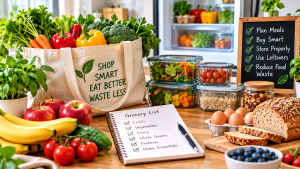
15 Grocery Shopping Tips to Reduce Food Waste:
1. Check Your Kitchen Before Going Shopping:
Before heading to the supermarket, spend five minutes checking your refrigerator, freezer, and pantry.
You may already have ingredients that can be used for several meals. Buying duplicates increases the chance that some food will remain unused.
Check for:
- Fresh fruits and vegetables.
- Milk, cheese, yogurt, and eggs.
- Leftovers from previous meals.
- Frozen vegetables and ready-to-cook ingredients.
- Rice, pasta, canned beans, and other pantry staples.
- Bread and other bakery products.
For example, if you already have potatoes, onions, carrots, and rice, you can plan several meals around these ingredients instead of purchasing more.
Smart tip: Keep a small inventory list on your phone and update it whenever you finish an essential item.
2. Plan Your Meals Before Making a Grocery List:
Meal planning is one of the simplest ways to reduce unnecessary grocery purchases.
Decide what you will cook over the next three to seven days, depending on your schedule. Then identify the ingredients required for each meal.
A simple meal plan might include:
- Monday: Vegetable soup and bread.
- Tuesday: Rice with vegetables and beans.
- Wednesday: Homemade pasta.
- Thursday: Baked potatoes with toppings.
- Friday: Sandwiches or wraps.
- Saturday: A meal using suitable leftovers.
- Sunday: Flexible meals based on available ingredients.
You do not need to follow the plan perfectly. Leave room for changes, unexpected invitations, and busy days.
The goal is to purchase food with a clear purpose rather than filling your shopping cart without knowing how you will use everything.
3. Always Shop With a Grocery List:
A shopping list helps you stay focused and avoid impulse purchases.
Organize your list into categories so you can find items quickly and avoid buying the same product twice.
For example:
| Category | Shopping Items |
|---|---|
| Fruits | Apples, bananas, oranges |
| Vegetables | Carrots, spinach, potatoes |
| Protein | Eggs, beans, tofu, chicken |
| Dairy | Milk, yogurt, cheese |
| Grains | Bread, rice, pasta |
| Pantry | Cooking oil, canned tomatoes |
Adjust the quantities to your household’s needs and what you already have at home.
Money-saving tip: Add items to your digital grocery list throughout the week instead of trying to remember everything just before shopping.
4. Buy Only the Amount You Can Use:
Buying more food does not always mean saving money.
A large package may offer a lower price per unit, but the deal becomes expensive if you throw away half of it.
Before buying large quantities of fresh produce, consider how quickly your household consumes it.
- Purchase smaller quantities of salad leaves if you use them occasionally.
- Buy ripe bananas according to how quickly your family eats them.
- Choose appropriate portions of fresh herbs.
- Avoid buying extra bread unless you can freeze it or use it in time.
- Buy bulk quantities only when you have a realistic plan to use them.
Think about the cost of the food you actually consume, not just the price displayed on the package.
5. Understand Grocery Discounts and Bulk Offers:
Supermarkets frequently advertise discounts, multi-buy offers, and larger family packs. These deals can be useful, but only when they match your needs.
Before purchasing an offer, ask yourself:
- Do I regularly use this product?
- Will I consume it before its quality declines?
- Do I have enough storage space?
- Is the unit price genuinely lower?
- Can I safely freeze the extra quantity?
For example, buying two packs of fresh berries may not be worthwhile if you cannot eat or freeze them in time.
However, buying discounted rice, pasta, or canned goods that you regularly use may be a sensible way to save money.
6. Choose Seasonal Produce:
Seasonal fruits and vegetables are often more readily available and may offer better value than produce transported over long distances or grown outside its usual season.
Choose fruits and vegetables that your household enjoys and can realistically consume.
Depending on the season and region, options might include apples, pears, squash, leafy greens, tomatoes, or berries.
There is no need to purchase a large quantity simply because a product is in season. Buy an amount that fits your meal plan.
You can also use frozen seasonal produce when it offers better convenience and helps you avoid spoilage.
7. Learn How Food Date Labels Work:
Understanding date labels helps you make informed decisions about food safety and quality.
In the UK, a use-by date is about safety, while a best-before date generally relates to quality. Always follow the storage instructions and avoid eating food past its use-by date.
In the United States, date-label meanings vary. Many dates relate to product quality rather than safety, although specific rules apply to certain products, including infant formula.
Remember these guidelines:
- Check dates before purchasing.
- Follow refrigeration and storage instructions.
- Inspect packaging for damage.
- Use food within the recommended safety limits.
- Never assume that food is safe just because it looks or smells normal.
Good date-label habits can prevent unnecessary waste without putting your health at risk.
8. Store Fresh Food Correctly:
Even carefully purchased groceries can spoil quickly when stored incorrectly.
Different foods require different storage conditions. Read the packaging and follow trusted food-safety guidance.
Useful practices include:
- Refrigerate perishable food promptly.
- Keep your refrigerator at or below 4°C (40°F), following local food-safety guidance.
- Store raw meat separately from ready-to-eat food.
- Keep dry goods in clean, dry, sealed containers.
- Avoid overfilling your refrigerator.
- Store fruits and vegetables according to their individual requirements.
Some produce lasts longer when refrigerated, while other items may be better stored in a cool, dry place.
Learning the correct storage method for frequently purchased foods can make a noticeable difference.
9. Use the First In, First Out Method:
The First In, First Out method, commonly called FIFO, means using older suitable items before newer purchases.
This simple technique helps prevent groceries from being forgotten at the back of your refrigerator or pantry.
When unpacking groceries:
- Move older products to the front.
- Place newer purchases behind them.
- Keep similar items together.
- Check dates and condition regularly.
- Plan meals around ingredients that need to be used first.
For example, place an older carton of milk at the front and the new carton behind it, while following the storage and date instructions.
FIFO is particularly helpful for dairy products, packaged foods, and pantry ingredients.
10. Make Your Freezer Work for You:
Your freezer can be one of the most useful tools for reducing household food waste.
Freeze suitable foods before they deteriorate, rather than waiting until they are nearly spoiled.
You may be able to freeze:
- Bread and bakery products.
- Berries and other suitable fruit.
- Chopped vegetables.
- Cooked meals and leftovers.
- Portions of sauces and soups.
- Other foods suitable for freezing.
Divide food into usable portions, label containers with the contents and date, and follow safe freezing and thawing instructions.
Freezing in smaller portions also makes it easier to take out only what you need.
11. Avoid Shopping When You Are Hungry:
Shopping on an empty stomach can make tempting snacks, sweets, and unplanned products harder to resist.
You may purchase items that were never part of your meal plan and later struggle to use them.
Before shopping, have a meal or snack if possible. Then follow your list and compare prices carefully.
This small habit can help reduce impulse purchases and make your grocery budget more predictable.
12. Reuse Leftovers Creatively:
Leftovers can become useful ingredients for another meal when stored and handled safely.
Instead of throwing away suitable leftover food, consider how you can incorporate it into a new dish.
Examples include:
- Leftover roasted vegetables in soup.
- Extra cooked chicken in sandwiches or wraps.
- Suitable leftover vegetables in an omelette.
- Extra pasta in a baked pasta dish.
- Ripe fruit in a smoothie, provided it is still safe to eat.
- Suitable cooked beans in a salad or rice bowl.
Refrigerate cooked food promptly in suitable containers. Follow food-safety guidance for storage, reheating, and freezing, and discard food that has been held unsafely.
Planning one flexible leftover meal each week can help you use food before it goes to waste.
13. Buy Frozen Vegetables for Convenient Meals:
Frozen vegetables can be a practical choice for busy households.
They are often available in convenient portions, can be stored for longer than fresh produce, and can be used in many everyday recipes.
Consider frozen peas, spinach, broccoli, mixed vegetables, or berries, depending on your needs.
Frozen foods can be especially useful when:
- You cook for one or two people.
- Your schedule changes frequently.
- You need only small portions.
- Fresh produce tends to spoil before you use it.
Choose fresh or frozen products according to your recipes, preferences, budget, and available storage.
14. Track What Your Household Throws Away:
If you repeatedly waste the same foods, tracking the problem can help you identify the cause.
For one week, record what you throw away and why.
| Food Item | Possible Reason | Better Solution |
|---|---|---|
| Salad leaves | Bought too much | Purchase a smaller pack |
| Bread | Not consumed in time | Freeze extra slices |
| Bananas | Ripened too quickly | Buy fewer at once |
| Leftovers | Forgotten in the refrigerator | Label containers and plan a leftover meal |
| Fresh herbs | Used in only one recipe | Plan several meals using them |
After a week, look for patterns and adjust your shopping habits.
You may discover that a few small changes could prevent much of your household food waste.
15. Create a Low-Waste Grocery Routine:
A consistent routine makes reducing food waste easier.
Before shopping
- Check the refrigerator, freezer, and pantry.
- Plan upcoming meals.
- Prepare a shopping list.
- Set a realistic spending limit.
After shopping
- Store food promptly.
- Organize older and newer items.
- Freeze suitable foods you cannot use soon.
- Make a note of items that need attention.
At the end of the week
- Review unused groceries.
- Prepare a meal using suitable leftovers.
- Record what went to waste.
- Adjust quantities for your next shopping trip.
You do not need to follow every tip immediately. Start with a few habits and build from there.
Grocery Shopping Tips for Families on a Budget:
Families can reduce food waste without sacrificing variety or nutrition.
Here are a few practical strategies:
Compare unit prices: Look at the price per kilogram, litre, or individual unit rather than relying only on the package price.
Plan shared ingredients: Choose meals that use overlapping ingredients so fewer products remain unused.
Keep emergency meals available: Store suitable frozen vegetables, beans, pasta, and other convenient staples for days when cooking plans change.
Shop according to household size: A small household may benefit from smaller packs, while a larger family may be able to use bulk purchases efficiently.
Avoid unnecessary perfection: Produce does not need to look perfect to be useful, provided it is safe and suitable to eat.
The best grocery strategy is the one that fits your family’s eating habits, storage space, and budget.
Frequently Asked Questions
1. What is the best way to reduce food waste while grocery shopping?
Check the food you already have, plan meals, create a shopping list, and purchase quantities you can realistically use. Proper storage and regular refrigerator checks help prevent waste after shopping.
2. How can I save money by reducing food waste?
Avoid duplicate purchases, compare unit prices, buy appropriate quantities, freeze suitable food, and use leftovers safely. These habits help you get more value from the groceries you purchase.
3. Is buying groceries in bulk a good idea?
Bulk buying can save money on frequently used, shelf-stable products. It may increase waste when perishable foods spoil before you can use them.
4. How can I keep fruits and vegetables fresh for longer?
Store produce according to its specific needs, refrigerate items that require refrigeration, and use delicate produce before longer-lasting ingredients. Follow food-storage guidance and discard spoiled food.
5. Can frozen food help reduce food waste?
Yes. Frozen food can make portion control easier and help preserve suitable ingredients. Follow the package instructions and safe freezing, thawing, and reheating practices.
6. Why should households reduce food waste?
Reducing food waste can lower grocery expenses, conserve resources used to produce food, and reduce the amount of organic waste sent to landfills.
Final Thoughts
Reducing food waste does not require expensive containers, complicated meal plans, or a complete change in your lifestyle. It starts with making thoughtful decisions before, during, and after grocery shopping.
Check what you already own, plan meals, buy realistic quantities, understand date labels, and store food properly. When possible, freeze suitable ingredients and use leftovers to create another meal.
The most important step is to develop habits that work for your household.
Shop with a plan, buy what you need, and make the most of every grocery purchase. Your budget and the environment can both benefit from smarter food choices.
Helpful Resources
- US Food and Drug Administration
- USDA Food Safety and Inspection Service
- UK Food Standards Agency
- WRAP — Food Waste Reduction
Disclaimer: Always follow local food-safety advice and product-specific storage instructions.